Python for Beginners Workshop: Master the Fundamentals
Join our hands-on workshop designed to take you from zero to building your first automated scripts and apps.
The world of programming can feel overwhelming. Our Python Beginners Workshop is designed to remove the noise and focus on the practical skills you need to build real-world solutions. Whether you're looking to switch careers or automate your current workflow, this is your starting point.
Why This Workshop is Different
Most online courses fail because they focus too much on theory and not enough on doing. In this workshop, we prioritize hands-on practice. You won't just watch videos—you will write code, solve problems, and build projects from day one. If you're wondering how to even get the tools ready, see our Python Installation Guide.
What You Will Learn
We’ve structured the curriculum to cover the "Big Four" of Python development:
Core Logic: Master variables, loops, and conditional statements.
Data Handling: Learn how to organize and manipulate information using lists and dictionaries.
Functions & Modules: Write reusable code and leverage the power of Python's library ecosystem.
Project Building: Apply everything to a final capstone project that you can add to your portfolio.
BONUS: The Fantastic Toolbox
Every participant gets lifetime access to our "Fantastic Toolbox"—a collection of scripts, templates, and cheat sheets to speed up your development.
The Methodology: Learn by Building
Our teaching philosophy is simple: Concepts -> Examples -> Projects. We explain a concept, show you how it works in a real-world scenario, and then give you a small project to implement it. This reinforces learning and builds the confidence you need to tackle harder challenges later on. Check out our 10 Tips for Beginners to see the habits we instill in our students.
Who is This Workshop For?
This program is specifically designed for:
Bonus: The Fantastic Toolbox
Every participant gets lifetime access to our "Fantastic Toolbox," a collection of scripts, templates, and cheat sheets to speed up your development.
3. A Path to Advanced Fields
Mastering the fundamentals is just the beginning. Our workshop prepares you for specialized tracks like Artificial Intelligence or Data Science. We help you build the foundation so you can choose your own path with confidence.
4. Community and Networking
You’ll be part of a vibrant community of fellow developers. Networking is a vital part of a tech career, and our workshop is the perfect place to build those early connections. Check our Tips for Beginners to see how to make the most of this community.
Workshop FAQs
Q: Do I need prior experience?
A: None at all. We start from absolute zero and guide you through every step of the process.
Q: What is the duration of the workshop?
A: The workshop spans 4 weeks, with live sessions twice a week and daily support in our community forum.
Q: Will I get a certificate?
A: Yes, upon completion of your final project, you will receive a certificate of accomplishment that you can share on LinkedIn.
Article Summary
The Python Beginners Workshop is more than just a course, it's a comprehensive entry point into the tech world. By focusing on practical application, mentorship, and community support, we ensure that students don't just learn syntax, but develop the problem-solving mindset of a developer. From the first line of code to the final project, we guide you through every step of your journey toward mastering the world's most versatile language.
Quick Read (TL;DR)
Transform from a **passive learner into an active creator**.
Learn through **practical, real-world projects**.
Get **live mentorship** and immediate feedback on your code.
Access the **"Fantastic Toolbox"** of scripts and templates.
Build a foundation for advanced tracks like **AI and Data Science**.
Course Benefits
⏰ Save Time: Automate repetitive tasks.
📈 Level Up: Acquire new skills the market demands.
👥 Become part of a Community: Connect with others who have common goals.
🎤 Live Q&A: Solve all your questions in real-time.
Event Information
Title: Free Seminar: Python for Beginners
Date: Sunday, October 12
Time: 19:00
Platform: Online (via Jitsi)
Registration Form
Seats are limited! Reserve your spot now!
Introduction
Python is a relatively easy programming language and simultaneously very powerful. Let's see why it's ideal to start programming with Python.
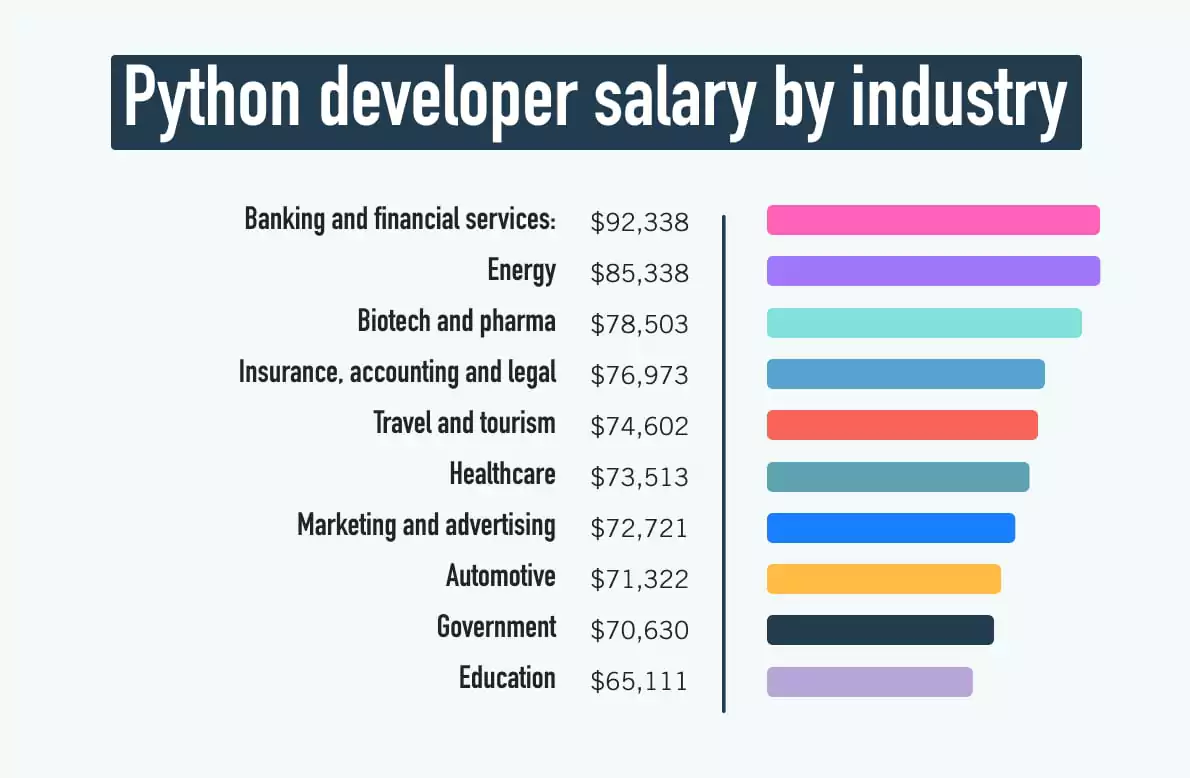
Programming in today's world of galloping technology is a basic skill, because it is used everywhere in our environment, regardless of the field you are involved in. By learning programming, we open professional doors globally, with great perspective and even greater financial rewards.
See below an image of the annual salary of a Python developer (2023 - Source: CarreerFoundry )
So, to learn how to program, we must learn a programming language, and Python is perhaps the best to start with.
Why learn programming and why learn Python
Programming is a valuable skill that can have many benefits for someone, regardless of the field they are involved in. While there are many reasons why someone should learn programming, here are some of the key ones:
Register for the first introductory lesson (free)!
1. **Problem Solving:** Programming teaches you how to analyze and solve problems logically and systematically. This skill can be applied in various areas of life.
2. **Creativity:** Programming allows you to create new applications, websites, games, and much more. It's a creative expression that allows the implementation of your ideas.
3. **Professional Possibilities:** Programming is one of the fastest-growing fields and offers many opportunities for work in various sectors such as technology, digital advertising, data science, and many others.
4. **Self-improvement:** The process of programming allows you to constantly learn new things and improve your skills. It's a process of continuous self-education.
5. **Understanding Technology:** Programming helps in understanding how the technology we use daily works. We acquire deeper knowledge of underlying systems.
What is Python - Basic information
Regarding Python, it's an extremely popular and user-friendly programming language. There are several reasons why Python is a good choice for beginners and advanced programmers:
1. **Readable Syntax:** Python's syntax is very readable and more reminiscent of human language, which makes it understandable even for beginners.
2. **Large Community:** There is a large and active newsletter of Python programmers that provides support, libraries, and many code examples.
3. **Versatility:** Python is used in many fields, such as websites, data science, artificial intelligence, and more, which gives you the ability to explore various sectors.
4. **Job Availability:** Knowing Python can open many doors in the tech and programming space, offering job opportunities.
Learning programming and especially Python can prove very beneficial for your personal and professional development.
Register for our first online meeting for the programming lessons we offer (the meeting is free online).
It's easy to read and understand: Python code is fairly easy, like the English language, making it easier for children to understand and write.
Python is one of the most popular high-level languages (a language understandable to humans), created by Guido van Rossum and released in 1991. A programming language is a way to communicate with computers, and Python focuses particularly on code readability but also on many other elements.
Python is a comprehensive, mature, intelligently made, very extensible, and beautiful language. Thus, it also has a philosophy.
For further information, read about the
Zen of Python
Wide range of applications
Python is a simple language, but it's also powerful and used in various fields.
Register for the first introductory meeting (free)!
Web application and page development - Web development
Game development
Machine Learning and Artificial Intelligence
Data Science and Data Visualization
Applications, Automation, and GUI for desktops
Web Scraping Applications
Business Applications
Audio and video applications
CAD Applications
Embedded Software Development
Starting with Python
To start programming with Python, we must set up our development environment. The environment (IDE) is the tool with which we learn to program.
Installing Python
Python is free and can be installed on different operating systems – for example, Windows, Linux, iOS, etc.
In our lessons, we start from scratch, describing and carefully following every step from the beginning, so there are no gaps and nothing remains unclear.
Course Information
The costs related to completing the course are included in the monthly subscription and there are no other additional costs, until the completion of the course and the acquisition of a Certificate of attendance.
Course Information
Lessons take place on the Skool platform (3-hour recorded videos)
The price of the lessons is ... (announced in the free informative seminar)
The reasonable completion time is 42 weeks - about 9 months (for the largest course package)
A 3-hour live meeting is held every month (for Q&A, code writing, etc.)
Continuous personal support via email (individually)
Continuous monitoring and encouragement / reminder for participation
Homework at the end of each lesson - Great importance is given to their solution by students
At the end of the course, a Certificate is provided
Our first meeting is free and we are fully informed about the lessons and all possible questions are answered. Register
In each lesson, we have developed easy-to-understand sections and practical exercises. Also, we accompany each lesson with exercises and solve every question live or through email.
Our lessons are well-designed, constantly improving, and we make sure you acquire at least the elementary knowledge of programming by the end of the course.
NOTE
It is also important to emphasize that you acquire two more very useful skills. The first is learning basic English, if you don't already know it, as programming in any language requires it, and the second is learning typing, as during the course we type a lot of code and avoid copy/paste practices for this reason.
Before your registration, make sure you have, in addition to the two hours of the lesson, another two hours free each week for study, practical exercise, and understanding of the weekly lesson.
Avoid overloading yourself by trying to "fit" the lesson and your study into a very tight schedule, as this leads to failure, or at least to a not-so-good learning experience.
Learning becomes easy, pleasant, and efficient if it's not done under time pressure.
Below, we inform you about the course syllabus (the syllabus may change and is adjusted according to the number, level, exact age, and other unexpected factors).
Syllabus - Python for Beginners Lessons
Week 1-2:
Introduction to Programming and Python language
Week 3-4:
Basic Programming Concepts
Week 5-6:
Flow Control
Week 7-8:
Lists and Data Structures
Week 9-10:
Functions
Week 11-12:
Exceptions and Error Handling
Week 13-14:
Files and Input/Output
Week 15-18:
Object-Oriented Programming
Week 19-20:
Lists, dictionaries, and tuples
Week 21-22:
Lists, dictionaries, and tuples (continued)
Week 23-24:
Introduction to Libraries and Small Project
Review, Conclusions and Next Steps
Expectations upon completion of the course
As you reach the end of this exciting programming course with Python, the world of technology opens its wings before you with inexhaustible possibilities.
Having acquired strong foundations in basic programming concepts and Python, you find yourself ready to create solutions to problems and explore new fields.
By designing, building, and perceiving the broader picture of programming knowledge, you discover the creative power hidden behind the code.
As you upgrade your skills, you will be able to develop your own applications, automate everyday processes, and approach new professional opportunities.
It is the beginning of an amazing adventure in the world of technology, where the only limitation is your imagination. Inspired and equipped, we invite you to continue your journey with the next series of lessons, where knowledge meets creativity and the future is discovered.